You may be the one named as Power of Attorney or Health Care Agent, but that doesn’t mean you should carry the responsibility alone.
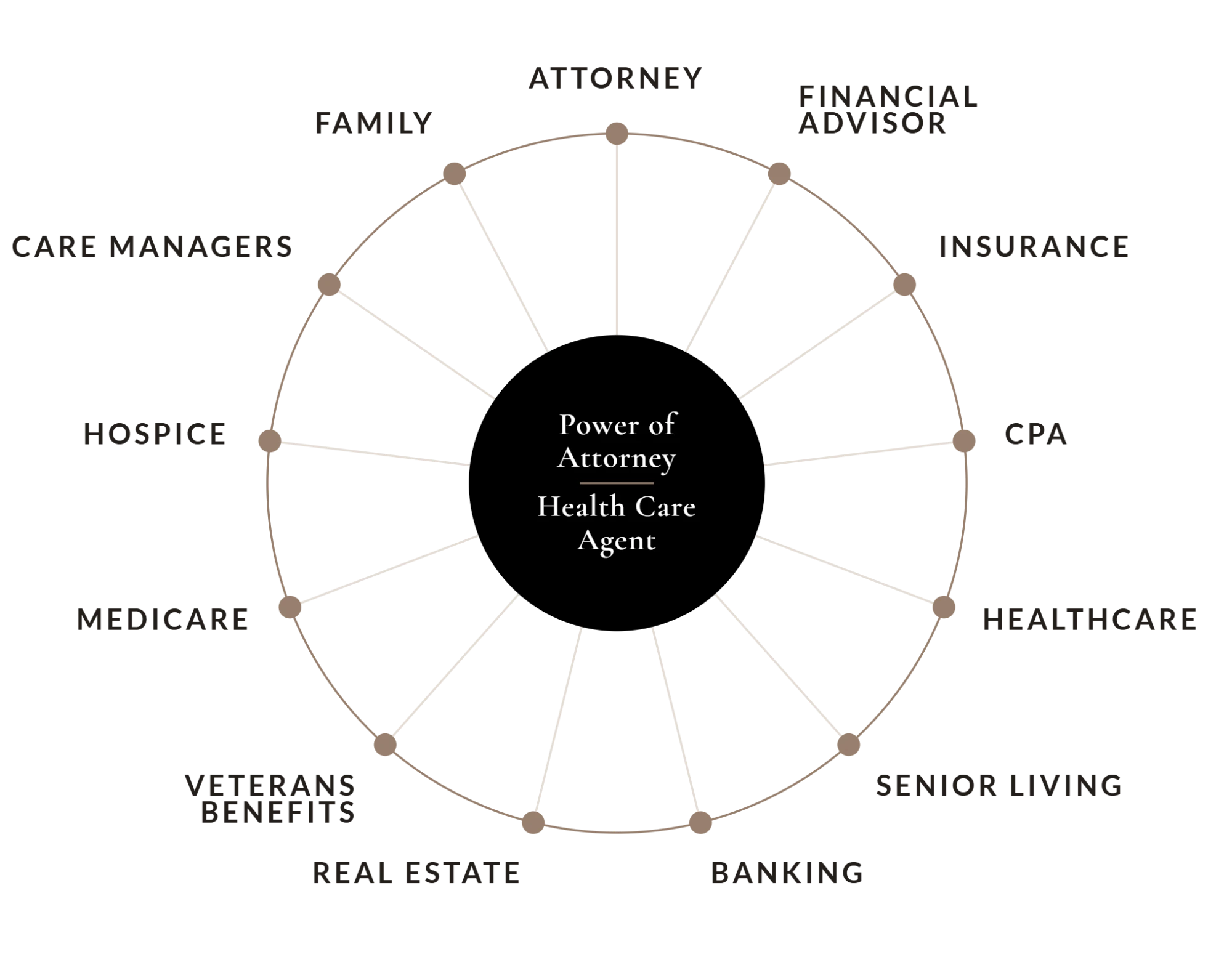
Serving in this role doesn’t require you to be an expert in law, medicine, taxes, benefits and real estate. It requires you to understand your responsibilities, recognize when you need help, and know who to turn to. That network of people is your Circle of Support.
Why nobody should do this alone
A Power of Attorney or Health Care Agent acts on someone else’s behalf, often during stressful moments: a diagnosis, a hospital stay, a move, a financial surprise. The decisions can be serious, and many of them call for knowledge no single person has.
Agents generally owe duties to the person they serve. Those duties typically include acting within the authority they’ve been given, acting in the person’s best interest and keeping good records. Seeking qualified guidance when a decision is outside your knowledge is part of serving responsibly, not a sign you’re failing at it.
You don’t have to be the expert in everything. You need to know when to bring the right people into the conversation.
The people in the Circle of Support
Every situation is different, so not everyone below will be part of yours. Think of this as a map of who may help.
Legal and financial
- Attorney. Explains your documents and the law in your state, and helps when your authority is unclear, challenged or needs to be confirmed.
- Financial advisor. Helps manage investments and plan for ongoing costs, within the authority your document gives you.
- CPA. Tax returns, filings and the recordkeeping questions that come with managing someone else’s money.
- Banking. Account access, presenting your authority, and watching for fraud and exploitation. (If you’ve hit resistance, see what to do when a bank won’t accept your Power of Attorney.)
- Insurance. Health, long-term care, life and property policies, coverage questions and claims.
- Real estate. Selling, leasing or maintaining property if that becomes necessary.
Health and care
- Healthcare. Physicians, nurses and care teams you coordinate with as a Health Care Agent.
- Care managers. Professionals who assess needs and help coordinate care and services.
- Hospice. Comfort-focused care and support for the whole family near the end of life.
- Senior living. Assisted living, memory care and other housing options when needs change.
Benefits
- Medicare. Coverage, enrollment periods and plan choices.
- Veterans benefits. VA benefits the person may be eligible for, through accredited representatives.
The people closest to you
- Family. Kept informed and involved, in keeping with the person’s wishes and privacy. Clear, regular communication prevents many of the conflicts agents face.
There’s no single order to follow
It can be tempting to want a checklist that says who to call first. In reality, who you need, and when, depends on the person’s circumstances, your documents and what is happening right now. A few examples:
- Just named as agent. Start by understanding what your document actually authorizes. An attorney can help if anything is unclear. Our first steps guide walks through the basics.
- A hospital stay. The healthcare team and, if one is involved, a care manager often come first.
- A move to senior living. Senior living staff, the financial side of the circle and family may all play a part.
- Near the end of life. Hospice and family are often central, along with the documents that describe the person’s wishes.
Build your circle before you need it
The calmest agents are usually the ones who did some quiet preparation. You can start today:
- Write down who’s already involved. Doctors, the bank, an attorney who drafted the documents, an insurance agent, a tax preparer.
- Keep contact details with your documents. When something happens, you won’t have time to search.
- Introduce yourself early. Letting key institutions know you’re the agent, while things are calm, can make later conversations easier.
- Notice the gaps. If no one in the circle can answer a certain kind of question, that’s a good time to look for the right professional, before a crisis.
- Take care of yourself, too. Your own support system matters. See caregiver burnout and how to protect yourself and our caregiver support resources.
The National Handbook explains the responsibilities in more depth, and the National Workbook Kits give you worksheets and trackers to organize the people, documents and decisions in one place.
Not sure who you need to contact first?
POA Caregiver provides education and navigation, not the professional services in the circle. If you’d like help thinking through your situation and your next step, a private consultation can help you sort out who may be needed, and when. You can also explore the Circle of Support on our caregiver support page and find your state’s official resources.
Common questions
Do I need a professional for every decision as a Power of Attorney?
No. Many everyday tasks, like paying routine bills and keeping records, are things an agent handles directly. The Circle of Support is about recognizing when a decision is outside your knowledge or your authority, and bringing in the right person when that happens.
Who should a new Power of Attorney contact first?
There is no single order that fits everyone. It depends on the person’s circumstances, what your document allows and what is happening right now. A hospital stay may call for the healthcare team first, while a financial question may start with the bank or an attorney.
Is a Health Care Agent the same as a financial Power of Attorney?
Not necessarily. A financial Power of Attorney covers money and property, while a Health Care Agent makes healthcare decisions under a health care directive or health care power of attorney. One person may hold both roles, or the roles may belong to different people, depending on the documents.
Should family members be part of the Circle of Support?
Usually, yes. Keeping family informed and involved, in keeping with the person’s wishes and privacy, can prevent misunderstandings and share the load. Family support does not change who holds legal authority under the documents.
This article is plain-English education, not legal advice. Power of Attorney law varies by state, and reading it does not create an attorney–client relationship. For guidance on your specific situation, talk with a licensed attorney in your state.