After-Loss & Transition
A Steady Guide to the Practical Steps After a Death
Find what matters, understand who can act, and handle notifications one step at a time.

Digital Kit · $59
- Complete digital kit
- National Handbook included ($39 standalone value)
- Instant digital access
Printed Kit · $99
- Complete printed kit, plus the digital kit
- Spiral-bound National Handbook included ($49 standalone value), plus the digital Handbook
- Free standard shipping
Why This Matters
“Grief is difficult enough without having to figure out every administrative responsibility at once.”
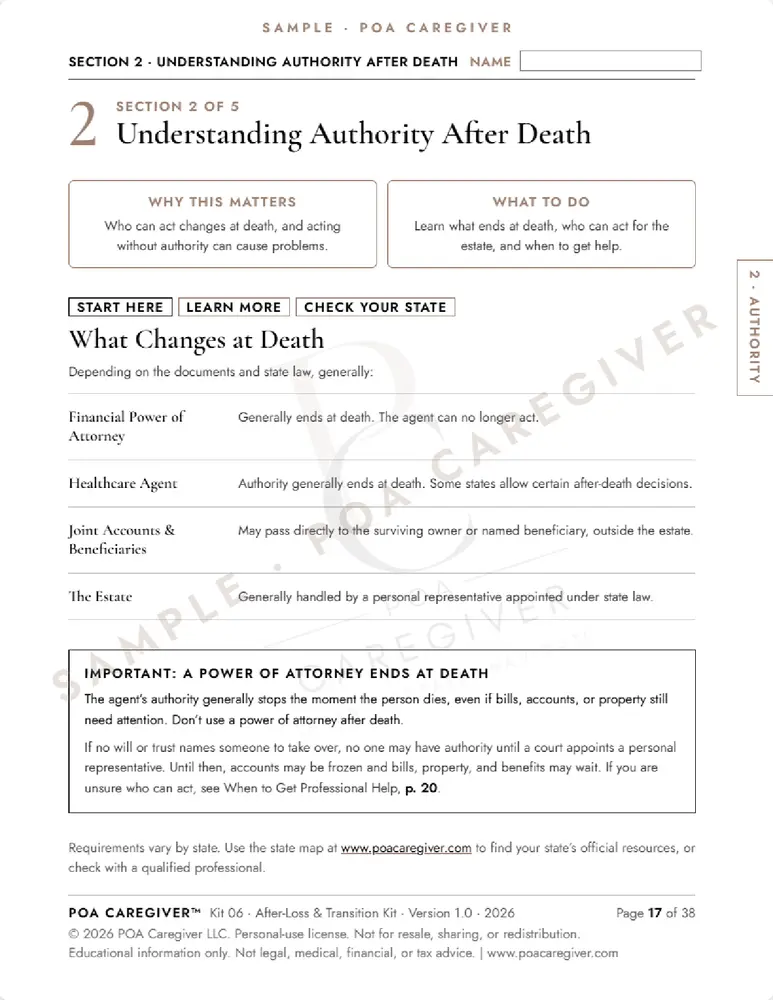
Authority changes at death.
After a death, families face many administrative tasks while grieving: locating documents, notifying institutions, securing property, and understanding who can act for the estate.
A Power of Attorney generally ends when the principal dies. Depending on the estate and state law, a court-appointed personal representative, a successor trustee, or the people named on accounts may handle what comes next. This kit helps you organize and understand these steps, and recognize when to seek professional guidance. It does not replace legal representation.
Sample pages
A Look Inside
A few pages from this kit. The complete kit is delivered after purchase.
Outcomes
What This Kit Helps You Do
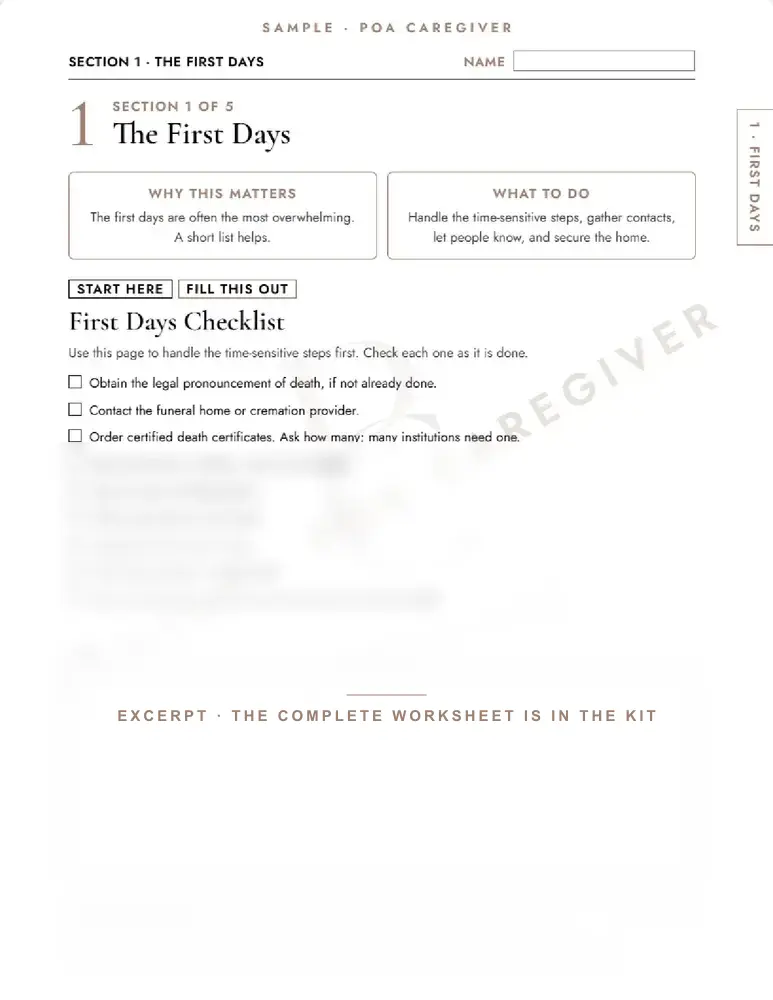
- 1Find and organize relevant estate documents, and inventory property and assets.
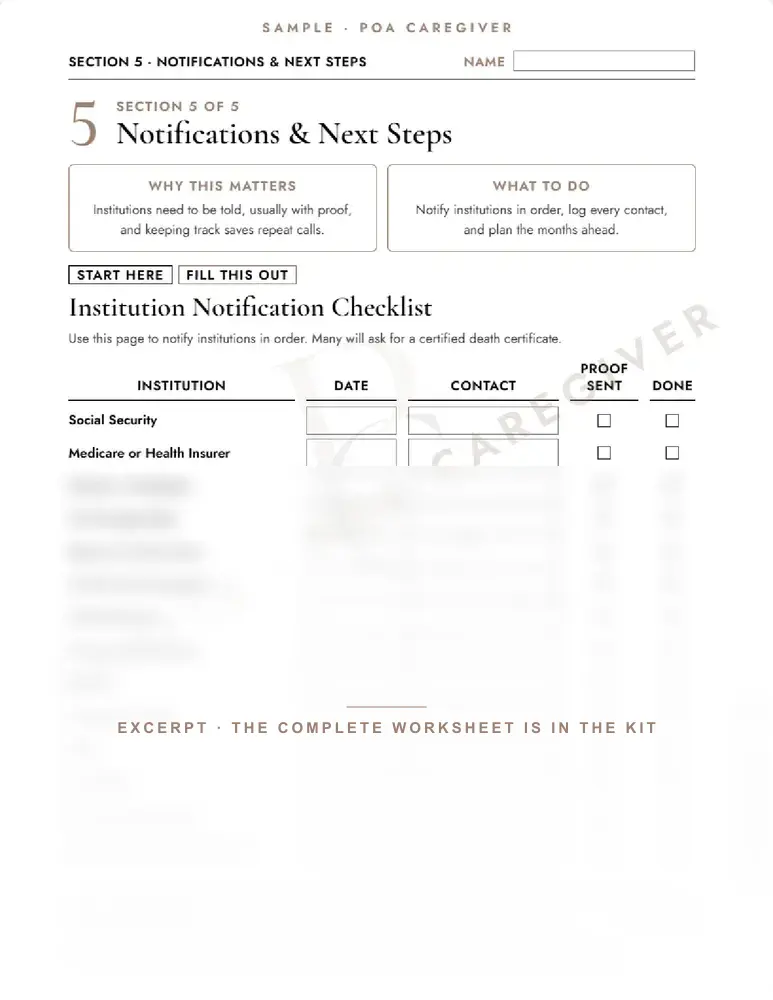
- 2Track institutional notifications in a clear sequence.
- 3Understand who may have legal authority, and recognize when professional help is needed.
Your state
Forms & Resources
Probate and estate administration are governed by state law and often by local court rules. Procedures, terminology, and court requirements vary by jurisdiction, and court forms typically come from the county where the person lived.
- Certified death certificates
- Probate or small estate forms, court-specific
- Letters testamentary or letters of administration
- Institution-specific claim and notification forms
Power of Attorney authority generally ends at death. Being named executor in a will does not by itself give immediate authority; a court appointment or other legal authority may be required. Some assets pass outside probate, and trust assets are generally handled by the trustee. Institutions may require specific documents before releasing information or assets. This kit supports initial organization. Estate administration, including probate where required, is separate, often takes months, and may require an attorney or other professional. Completing the kit does not by itself give anyone authority.
This kit does not replace legal, tax, or probate advice, a court appointment, or state-specific procedures.
Find Your State’s ResourcesQuestions
Frequently Asked Questions
What am I receiving?
The complete After-Loss & Transition Kit: guided checklists, worksheets, and trackers for the practical steps after a death, plus the National Handbook. Choose Digital ($59, instant digital access) or Printed ($99: the printed kit and a spiral-bound Handbook, plus both digital copies, with free standard shipping).
Can I still use the Power of Attorney after my parent dies?
Generally, no. A Power of Attorney generally ends when the person who signed it dies. After that, matters are typically handled by whoever has authority over the estate or its assets under state law.
Who has authority to act for the estate?
It depends on the estate and state law. A person named as executor in a will usually must be appointed by the court before acting for the estate; if there is no will, the court may appoint an administrator. Trust assets are generally handled by the successor trustee, and some assets pass directly to named beneficiaries or joint owners outside probate.
Am I responsible for my loved one’s debts?
Generally, family members are not personally responsible for a loved one’s debts just because they are family. Debts are generally paid from the estate. Exceptions can apply, such as co-signed loans, joint accounts, or certain state rules, so check with a qualified professional.
Which product should I choose if I am just getting started?
Start here if someone has recently died and you’re handling what comes next. When you’re ready, the Before a Crisis Kit can help you organize your own information, and the Health Care Directive Kit can help you put your own healthcare wishes in writing. Both are optional, and there’s no rush.
Requirements vary by state. Use the state map at www.poacaregiver.com to find your state’s official resources, or check with a qualified professional.
Kit 06 · Available now
Find Your Next Steps
Choose digital or printed. Both include the complete kit.
Personal-use license. Organizational, co-branding, and white-label use require a separate agreement. Ask about organizational use
Explore more in Life & Family Planning
POA Caregiver resources are educational and organizational. They do not provide legal, medical, financial, tax, or accounting advice. Requirements vary by state and institution.