Being Named Power of Attorney Is More Than Signing a Document.
Being named as an agent can involve important decisions, communication with institutions, managing financial or property matters when authorized, and maintaining records. The Power of Attorney Kit helps individuals understand what it means to appoint an agent or serve as one, recognize the authority and limitations in their documents, and prepare for responsibilities before they become urgent.

Digital Kit · $59
- Complete digital kit
- National Handbook included ($39 standalone value)
- Instant digital access
Printed Kit · $99
- Complete printed kit, plus the digital kit
- Spiral-bound National Handbook included ($49 standalone value), plus the digital Handbook
- Free standard shipping
Why This Matters
“Knowing someone trusts you is important. Understanding the responsibilities that may follow is just as important.”
Appointing an agent and acting as one are different responsibilities.
The person signing a Power of Attorney decides how much authority to grant. The agent must act within that authority, follow applicable state law, and keep careful records.
Agents generally owe duties to the principal: acting in their best interest, staying within the authority granted, keeping funds separate, and keeping records. This kit helps both sides understand the document’s scope and prepare to work with the institutions and people who rely on the document.
Sample pages
A Look Inside
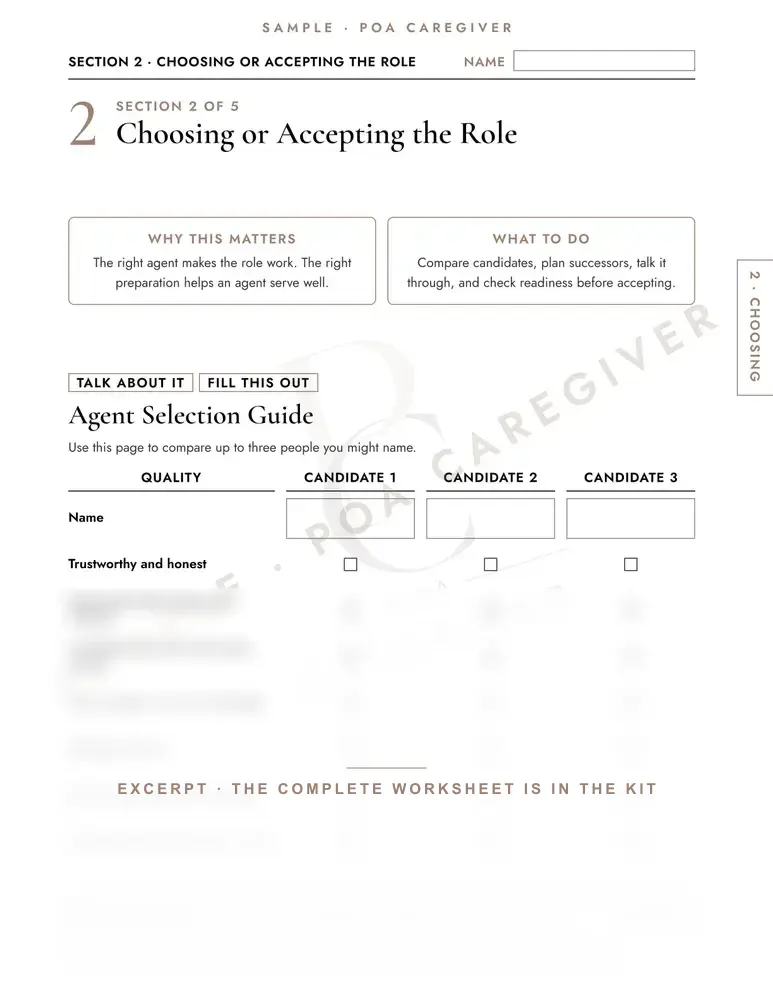
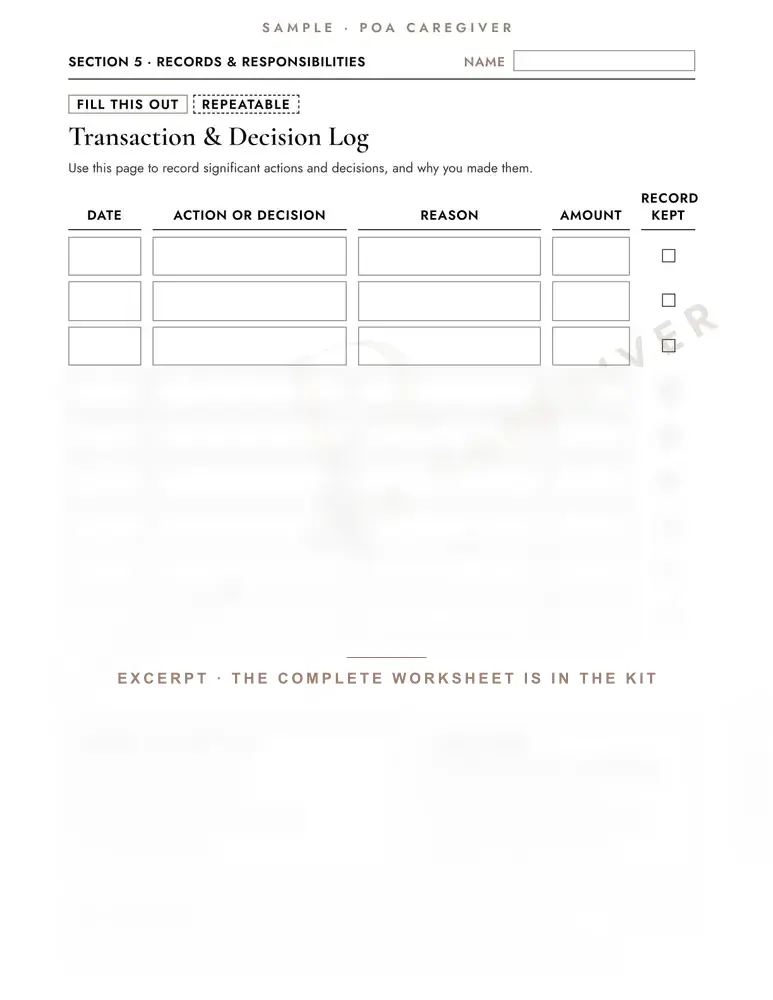
A few pages from this kit. The complete kit is delivered after purchase.

Outcomes
What This Kit Helps You Do
- 1Understand an agent’s general duties and limits before acting.
- 2Recognize what your document does and doesn’t authorize.
- 3Keep records that show responsible decisions.
Your state
Forms & Resources
Power of Attorney documents, terminology, authority, and execution requirements vary by state and by the type of authority granted. Financial and property management are common areas of responsibility, and institutions may have their own document-review procedures.
- Statutory Power of Attorney form, where available
- Durable Power of Attorney
- Agent certification or acknowledgment
- Institution-specific Power of Attorney review requirements
An agent may act only within the authority granted by the document and applicable law. Power of Attorney authority generally ends when the principal dies. Health care decision-making may be governed by separate documents and laws. Completing the kit does not by itself make any legal document valid or give anyone authority.
Find Your State’s ResourcesQuestions
Frequently Asked Questions
What am I receiving?
The complete Power of Attorney Kit: guided worksheets, document-review and record-keeping tools, and planning resources, plus the National Handbook. Choose Digital ($59, instant digital access) or Printed ($99: the printed kit and a spiral-bound Handbook, plus both digital copies, with free standard shipping).
Can the principal still manage their own affairs?
Yes. Naming an agent generally does not take away the principal’s own authority while they have capacity.
What if a bank refuses to accept the Power of Attorney?
Ask what the bank needs, such as its own form or an agent certification. Some states have rules about when institutions must accept a valid document. A qualified attorney can advise.
Which product should I choose if I am just getting started?
Start here if you’re naming a Power of Attorney agent or have been named as one. If you want to organize the whole household first, the Before a Crisis Kit is the broader starting point.
These answers are general education. For a specific situation, consult a qualified professional, and use the state map at www.poacaregiver.com to find your state’s official resources.
Kit 03 · Available now
Understand the Responsibility
Choose digital or printed. Both include the complete kit.
Personal-use license. Organizational, co-branding, and white-label use require a separate agreement. Ask about organizational use
Explore more in Life & Family Planning
POA Caregiver resources are educational and organizational. They do not provide legal, medical, financial, tax, or accounting advice. Requirements vary by state and institution.